What happens when an MD Anderson breast oncology investigator Dr. Mouabbi sits down with a high-volume community oncologist Dr. Cairo, who now treats the same patients the trials were written for? Over one fast-moving hour, they chart the collapse of the old HER2 binary, weigh DESTINYBreast 04 against 06, and admit that practicing oncologists still hesitate to jump straight from endocrine therapy to trastuzumab deruxtecan (TDXd) when trusty capecitabine is sitting on the shelf. They swap war stories about persuading pathology to report “ultralow” staining, debate whether any historical 1+ slide is enough to warrant an ADC, and reveal why “whichever ADC you give first is going to be your best ADC.” The conversation converges into ILD pragmatics, that is, community clinicians, it seems, aren’t the least bit afraid before landing on a new term the duo coined on air: “endocrine dynamics,” that is, the art of cycling back to hormones once the aggressive clone is beaten down by an ADC.
Highlights you’ll hear: the trial-by-trial evolution from DB04 to DB06 and why ultralow tumors now matter; capecitabine versus the allure of earlier ADCs; ultralow testing bottlenecks and the coming ASCOCAP guideline shakeup; sequencing philosophies (sandwich vs back-to-back) and their payload implications; real-world ILD management that’s less daunting than advertised; and, at the close, a playful wager on whether we’ll soon treat every HR-positive case as “ADC-eligible” until true zero is finally defined.
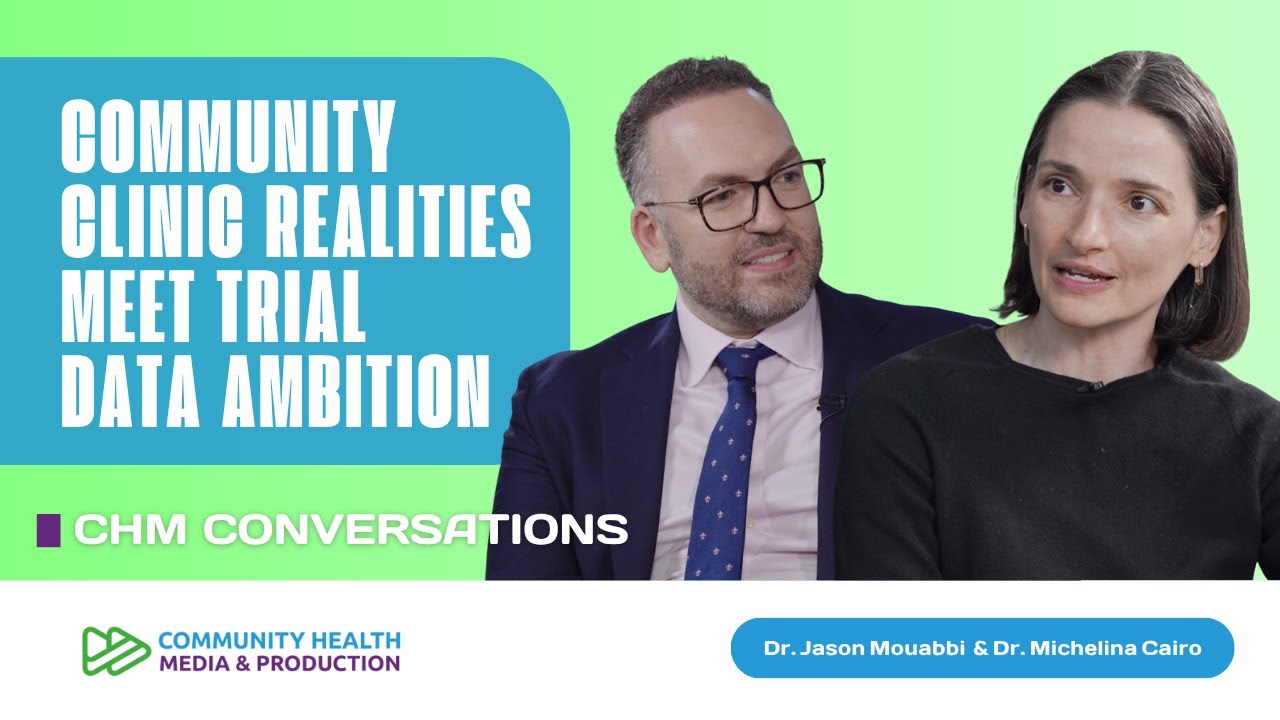
Dr. Jason Mouabbi & Dr. Michelina Cairo – Talking DB04 and DB06
Recommended Videos